Masindi District LG P.O Box 67 Masindi Tel: +256(0) 772 586423 Email: [email protected]

Masindi District urged to strengthen PDM loan recovery and Beneficiary support
Friday, November 13, 2026
By Brian Atuhura
Masindi District has been urged to strengthen the implementation of the Parish Development Model(PDM),particularly loan recovery,enterprise selection and follow-up of beneficiaries,to ensure that more households benefit from the government poverty alleviation programme.
The call was made by Dr.Robert Behangana,the PDM Coordinator for the Bunyoro Sub-Region from the PDM Secretariat in the Ministry of Local Government,during a routine monitoring exercise aimed at assessing the implementation status and performance of the programme since its inception in 2022.
Dr.Behangana explained that the monitoring exercise was intended to establish the progress registered under the programme,with particular attention to the Parish Revolving Funds(PRF),loan recovery performance and challenges affecting beneficiaries.
He noted that the team would also engage district technical officers and other stakeholders to identify practical ways of improving loan recovery,especially among beneficiaries who accessed funds during the initial disbursement phases,so that the recovered money could be redistributed to other eligible households.
Dr.Behangana expressed concern over the low recovery performance in the district,revealing that only Shs 15.4 million had been recovered against a targeted Shs 7.4 billion.
He called upon district technocrats to intensify their support to PDM beneficiaries by helping them identify viable and commercially sustainable enterprises capable of generating sufficient income to enable them repay their loans and improve their household livelihoods.
Presenting the district's PDM implementation status report,the District Production Officer,Prudence Alituha,revealed that a total of 16,422 beneficiaries were engaged in different enterprises across the district.
Maize was reported as the leading enterprise,attracting 4,927 beneficiaries,representing 30 per cent,followed by piggery with 3,449 beneficiaries(21 per cent),goats with 2,792 beneficiaries(17 per cent),and poultry with 2,628 beneficiaries(16 per cent).
Other enterprises included beans,which attracted 1,314 beneficiaries (8 per cent),bull fattening with 493 beneficiaries (3 per cent),while 821 beneficiaries (5 per cent)were engaged in other enterprises.
Alituha attributed the poor loan recovery performance to several operational and economic challenges affecting beneficiaries and the programme's implementation structures.
She cited challenges associated with the Wendi payment system,including limited float and network failures,as well as inadequate knowledge among beneficiaries regarding the procedures for making loan repayments.
She further explained that some beneficiaries had experienced enterprise failures resulting from prolonged drought ,pest infestations and animal diseases,particularly Foot and Mouth Disease,which affected livestock production and reduced their ability to generate income.
Poor market prices were also identified as a major challenge,with some beneficiaries failing to realise sufficient returns from their agricultural enterprises to sustain their businesses and meet loan repayment obligations.
Alituha also pointed out that inadequate follow-up by SACCO leaders had contributed to the low recovery rate,attributing this to limited transport,facilitation and enforcement tools needed to monitor beneficiaries and ensure compliance with repayment arrangements.
Despite the challenges,she highlighted several achievements registered under the programme,including the capitalization of 16,222 households and the registration of 46 SACCOs with elected boards,vetting committee's and loan committees to oversee the implementation of the programme.
She added that the programme had stimulated increased economic activity,with visible growth in poultry,piggery and fruit enterprises in Bwijanga,Budongo,Pakanyi,Miirya and Kimengo Sub-Counties.
Alituha further noted that PDM had contributed to financial inclusion by enabling thousands of households to open financial accounts and become members of SACCOs for the first time,thereby increasing their participation in formal financial services.
Speaking during the same engagement,the Principal Assistant Chief Administrative Officer,Musa Kyamiza,encouraged District technocrats to embrace additional income-generating activities alongside their government employment as a way of improving their personal incomes and livelihoods.
Kyamiza challenged technical officers to take a practical approach towards poverty alleviation by providing farmers and other PDM beneficiaries with appropriate agricultural guidance and solutions that can help them establish profitable enterprises.
He emphasized that government officers should not only sensitise communities about the opportunities available under PDM but should also demonstrate practical approaches to wealth creation and improved household incomes.
He observed that embracing additional productive activities could also help technocrats appreciate the challenges faced by communities while promoting sustainable economic transformation.
While closing the engagement ,the Secretary for Social Services,William Mwambu,called upon the PDM Secretariat to review and harmonise the programme guidelines to eliminate possible inconsistencies and confusion arising from different guidelines issued by various government ministries.
Mwambu noted that harmonised guidelines would provide clarity to implementers and improve coordination in the execution of the programme at the local government level.
He also commended government for ensuring that Persons With Disabilities(PWDs)were considered among the beneficiaries of the Parish Development Model,describing their inclusion as an important step towards promoting equal economic opportunities and inclusive development.
The Parish Development Model,which was launched in 2022,is a government strategy aimed at moving households from subsistence production into the money economy through organised production,value addition,financial inclusion and access to affordable credit through Parish SACCOs.
The monitoring engagement comes at a time when strengthening loan recovery,improving enterprise management and addressing operational challenges remain critical to ensuring the sustainability of the Parish Revolving Funds and the programme's overall objective of improving household incomes.
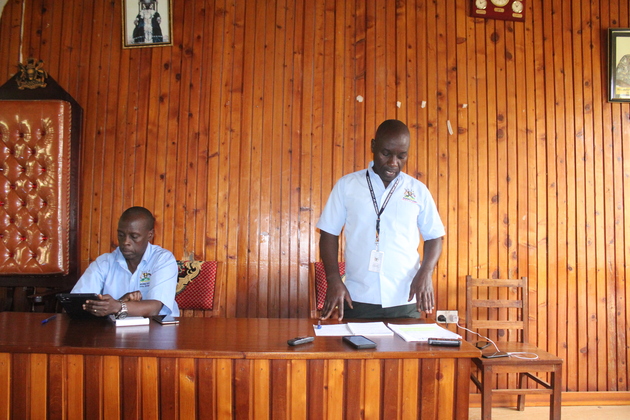
News Photo: